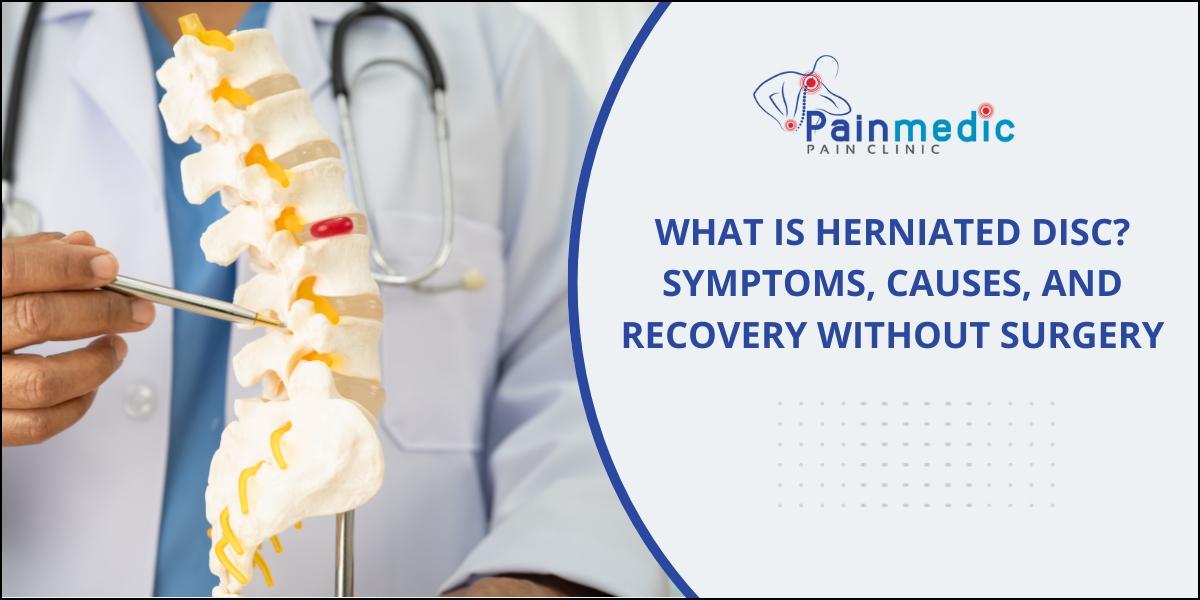
What Is a Herniated Disc? Symptoms, Causes, and Recovery Without Surgery.
If you’ve ever felt a sharp, shooting pain down your leg or a persistent ache in your back, you might have wondered about the health of your spine. One common culprit behind such discomfort is a herniated disc. While the term might sound alarming, understanding what it is and knowing that recovery is often possible without surgery can be incredibly empowering. This guide breaks down everything you need to know about herniated discs, from symptoms and causes to effective non-surgical recovery paths.
Understanding a Herniated Disc
Your spine is made up of bones (vertebrae) cushioned by discs. These discs are like soft, jelly-filled doughnuts with a tough outer layer (annulus fibrosus) and a soft, gel-like center (nucleus pulposus). A herniated disc, sometimes called a slipped or ruptured disc, occurs when the soft center pushes through a tear in the tougher exterior.
This bulge can irritate or press on nearby spinal nerves, leading to pain, numbness, or weakness. It most commonly occurs in the lower back (lumbar spine) but can also affect the neck (cervical spine).
Common Symptoms of a Herniated Disc
Symptoms vary widely depending on the disc’s location and whether it’s pressing on a nerve. Some people have a herniated disc without any symptoms at all. When symptoms do occur, they may include:
- Localized Pain: Aching or burning pain in the area of the affected disc (e.g., lower back or neck).
- Radiating Pain: Often the most telling sign. This includes sciatica—sharp, shooting pain that radiates from your buttock down the back of one leg. For a neck herniation, pain might shoot into the shoulder and arm.
- Numbness or Tingling: A “pins and needles” sensation in the part of the body served by the affected nerves.
- Muscle Weakness: Weakness in the muscles connected to the affected nerves, which may cause stumbling or impair your grip strength.
- Worsening Pain with Movement: Pain often intensifies with activities like bending, lifting, twisting, or even sitting for long periods.
What Causes a Herniated Disc?
A herniation is usually the result of a combination of factors:
- Age-Related Wear and Tear (Disc Degeneration): As we age, our spinal discs lose some of their water content, making them less flexible and more prone to tearing.
- Improper Lifting: Using your back muscles instead of your legs to lift heavy objects can be a direct trigger.
- Trauma or Injury: A sudden impact or fall can cause a disc to herniate.
- Genetics: Some people inherit a predisposition to developing disc problems.
- Lifestyle Factors: Occupations involving repetitive lifting, pulling, bending, or twisting increase risk. Sedentary lifestyles and smoking can also accelerate disc degeneration.
The Road to Recovery Without Surgery
The good news is that over 90% of people with a herniated disc improve with non-surgical treatments within a few weeks to months. Surgery is typically considered only after conservative methods have failed for an extended period. Here’s a roadmap for non-surgical recovery:
- Initial Rest & Activity Modification: Short-term rest (1-2 days) is helpful, but prolonged bed rest is discouraged. Modify activities that aggravate pain, but stay as mobile as possible.
- Physical Therapy: A cornerstone of recovery. A physical therapist can teach you exercises to strengthen your core and back muscles, improve flexibility, and promote proper movement patterns to relieve nerve pressure.
- Medication: Over-the-counter anti-inflammatories (like ibuprofen) or prescription medications can help manage pain and inflammation in the short term.
- Epidural Steroid Injections: For severe pain, a corticosteroid injected directly near the affected nerve can provide significant, temporary relief and allow you to engage more effectively in physical therapy.
- Mind-Body Techniques: Practices like mindfulness, gentle yoga, or tai chi can help manage pain and improve body mechanics.
- Lifestyle Changes: Maintaining a healthy weight, practicing good posture, learning safe lifting techniques, and quitting smoking are crucial for long-term spine health.
Consistency with your prescribed exercise and lifestyle plan is key to a lasting recovery and preventing future episodes.
Expert Herniated Disc Care in Pune at Painmedic Clinic
Seeking expert guidance for a herniated disc, Painmedic Pain Clinic offers comprehensive, personalized non-surgical treatment plans. Led by Dr. Kauser Mujawar, a renowned Body Pain Specialist in Pune, the clinic focuses on accurately diagnosing the root cause of your pain and employing advanced interventional techniques like epidural injections, alongside structured rehabilitation programs.
Visit : Dr. Kauser Mujawar | Painmedic Pain Clinic in Pune | Non Surgical Pain Clinic
Address : 202, KD Plaza, Timber Market Rd, near Seven Loves Chowk, Ekbote Colony, Mahatma Phule Peth, Swargate, Pune
Contact Number : +91 8686313147
FAQs About Herniated Discs
1. Can a herniated disc heal on its own?
Yes, in many cases. With time and proper conservative care like physical therapy and activity modification, the body can reabsorb the herniated portion of the disc, reducing nerve irritation.
2. What does a herniated disc feel like?
It often feels like a sharp, burning, or electric pain that radiates from your back down your leg (sciatica) or from your neck to your arm. You may also experience numbness, tingling, or muscle weakness.
3. How long does a herniated disc take to heal?
With non-surgical treatment, many people see significant improvement within 6 weeks. Full recovery can take several months, depending on the severity.
4. What should you avoid with a herniated disc?
Avoid heavy lifting, repetitive bending or twisting, high-impact sports, and prolonged sitting. Always maintain good posture and use proper lifting techniques.
5. Is walking good for a herniated disc?
Yes, walking is generally excellent. It’s a low-impact activity that promotes blood flow, reduces stiffness, and can help reduce pain without placing excessive strain on the spine.